About

1. Who is behind CERTs? 3. What do we do? 5. How do the CERTs operate?
2. How is CERTs funded? 4. CERTs successes 6. CERTs phases

What is CERTs?

 
Download CERTs Fact Sheet Community members from around the state have developed a bold vision for Minnesota’s energy future, through greater energy efficiency and production from clean 21st Century technologies including wind, biomass, biofuels and solar power. Minnesotans’ vision is becoming a reality now, one project at a time. The Clean Energy Resource Teams (CERTs) project, launched in 2003, is connecting people with the technical resources needed to identify and implement community-scale energy efficiency and clean energy projects.

The Clean Energy Resource Teams are diverse—individuals, small business owners, farmers, members of environmental groups, local utility representatives, local, state and federal government staff and elected leaders, academics—and all share common goals and values. They want strong communities, local jobs, and secure, clean, reliable energy.

The CERTs approach is one of pragmatism and cooperation. It’s a model for how tangible economic, social and environmental benefits can be achieved by reaching across traditional interest groups and taking a true, community-based approach. In fact, CERTs has become something of a model for community-based clean energy.

Download a CERTs Factsheet >>

1. Who is Behind CERTs?

 
The Clean Energy Resource Teams project is a public-private partnership consisting of:

  • Community Members: local residents in all CERT regions
  • University: University of Minnesota Regional Sustainable Development Partnerships
  • Nonprofit: The Minnesota Project & The Green Institute
  • Government: Southwest Regional Development Commission & Minnesota Office of Energy Security, Department of Commerce

Learn more about partner organizations and staff >>
See CERTs organizational structure >>

2. How is CERTs Funded?

 
Current funders:

Past funders:

3. What Do We Do?

  • Host meetings & tours and facilitate gatherings
  • Connect people to technical resources
  • Research energy efficiency and renewable energy technologies and projects
  • Identify and provide project funding resources

4. CERTs Successes

 
Download CERTs Milestones Since its inception CERTs has created networks, provided education and helped catalyze projects. Here are some of the milestones met by the CERTs project:

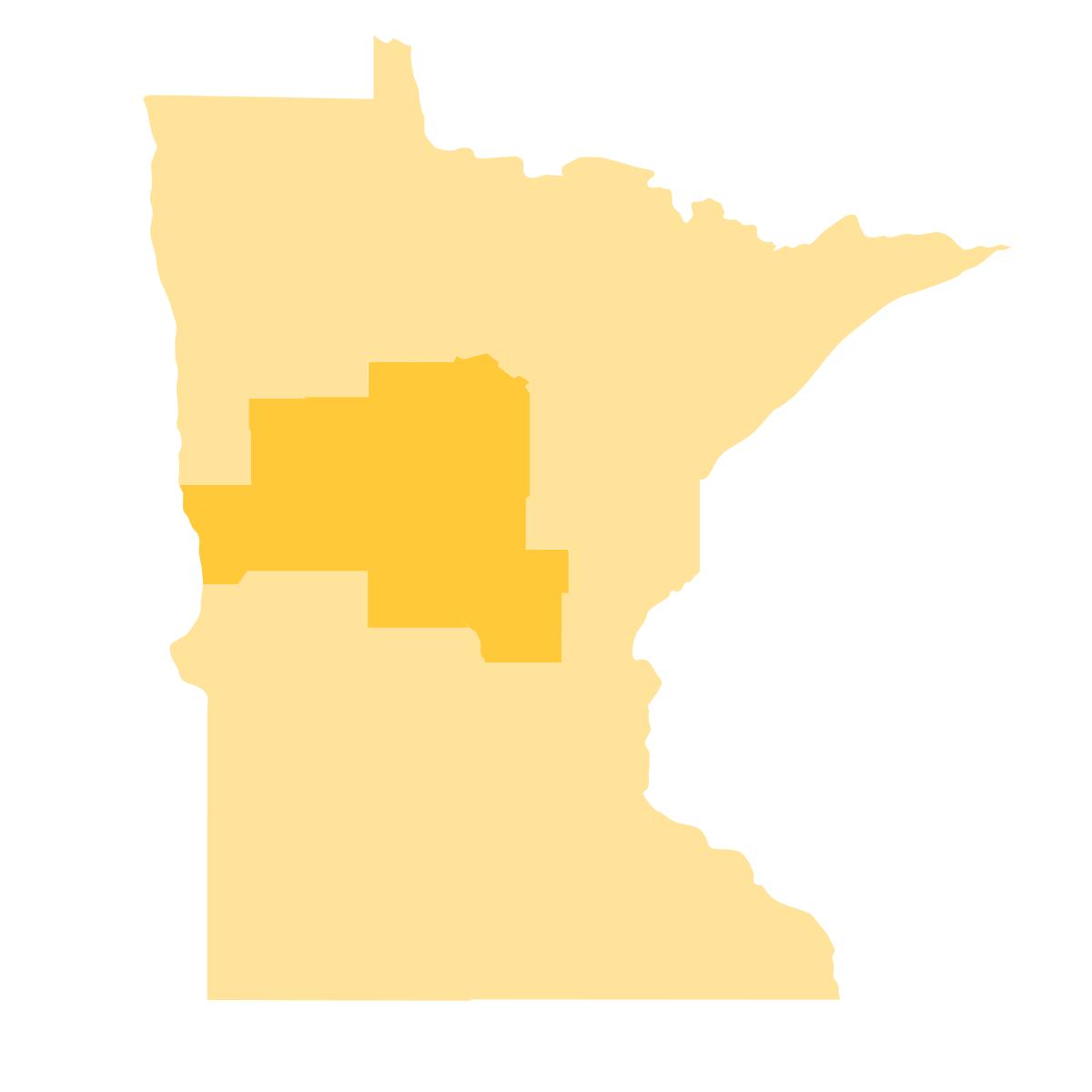
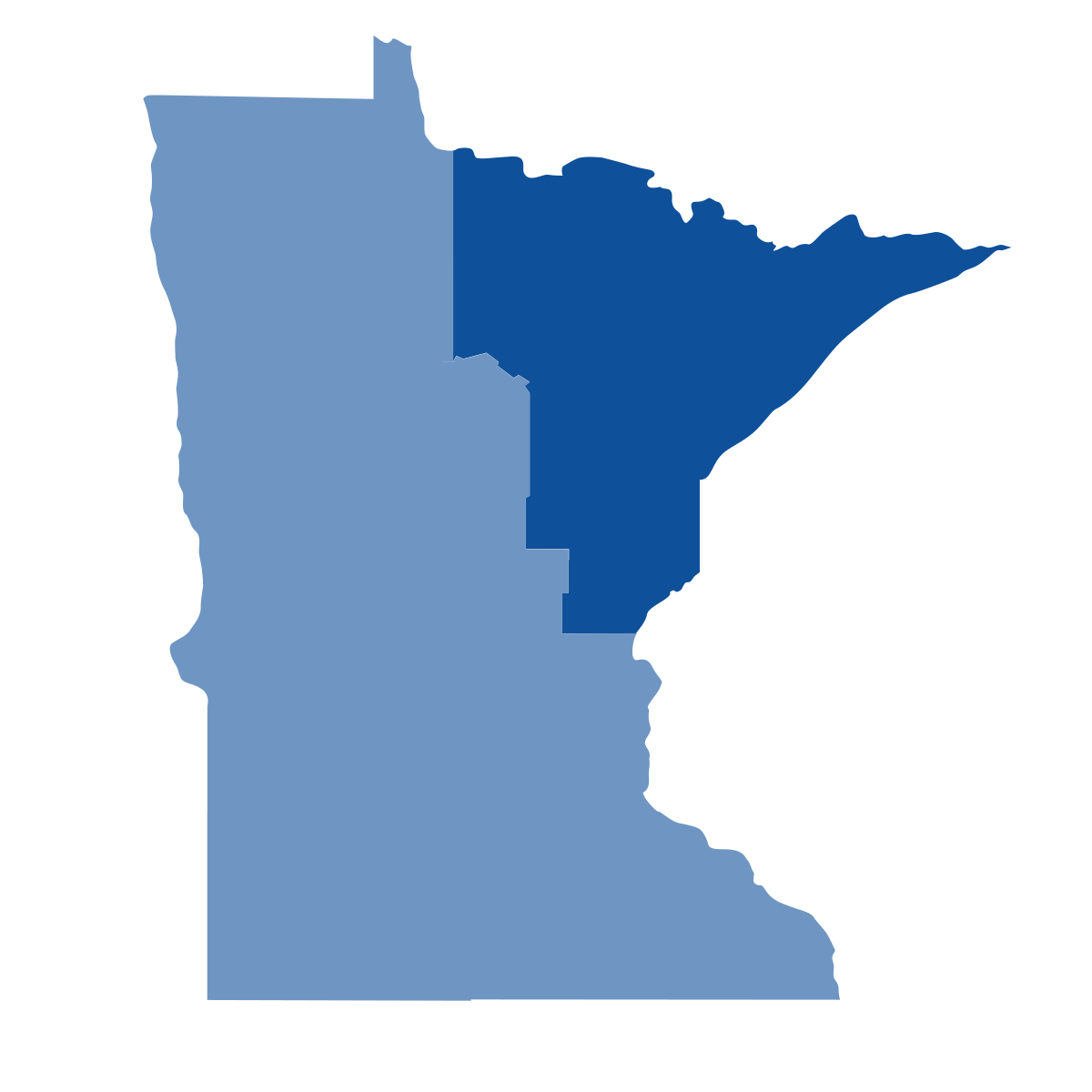
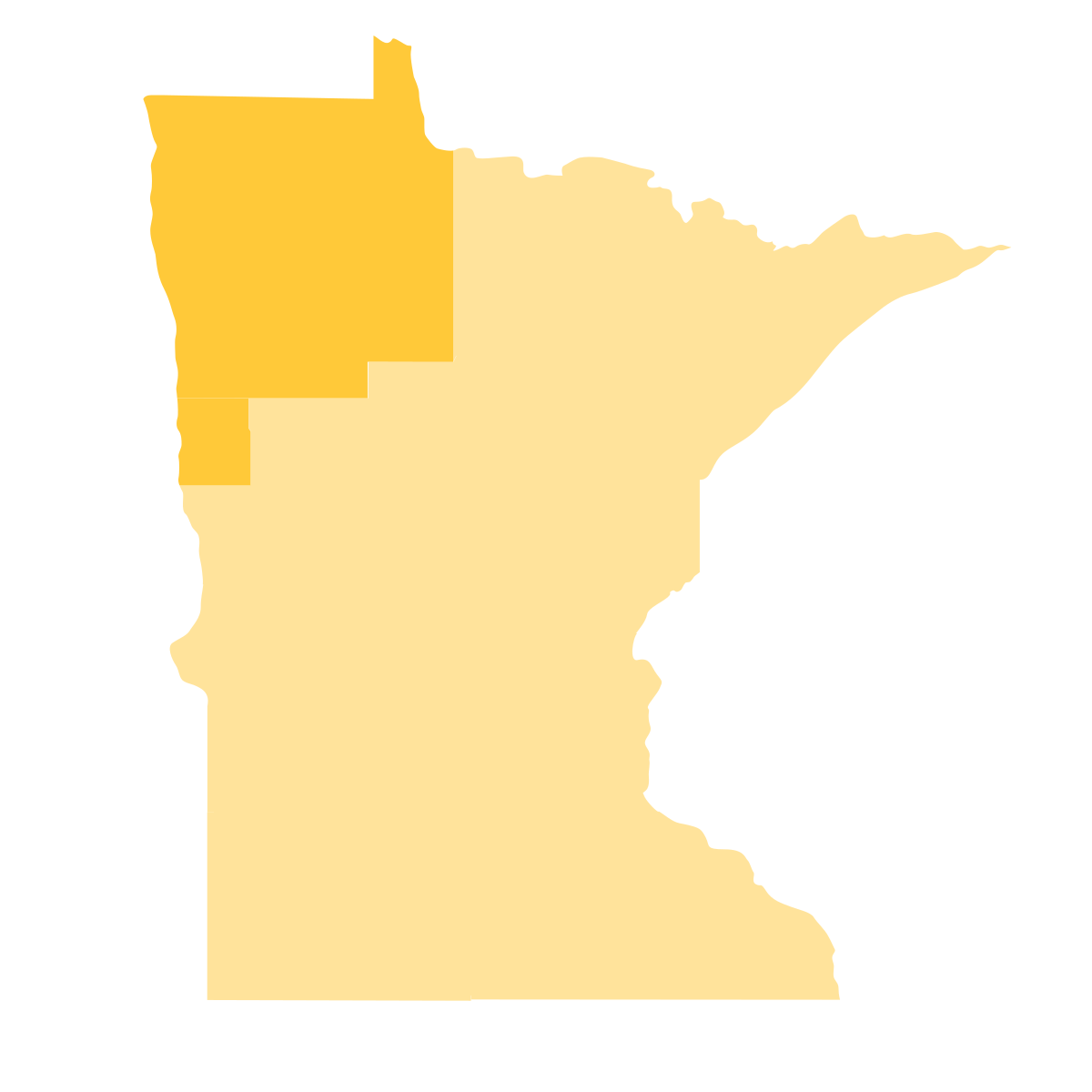
  • In 2005, Regional Strategic Clean Energy Plans were created in the six rural CERT regions.
  • In 2006, 17 new clean energy projects were catalyzed with seed grants of $1,000 or less, leveraging additional community funding and helping to create tomorrow’s energy system in communities today.
  • CERTs won the 2006 Minnesota Environmental Initiative’s Partnership of the Year award for the diverse collection of stakeholders it’s mobilized.
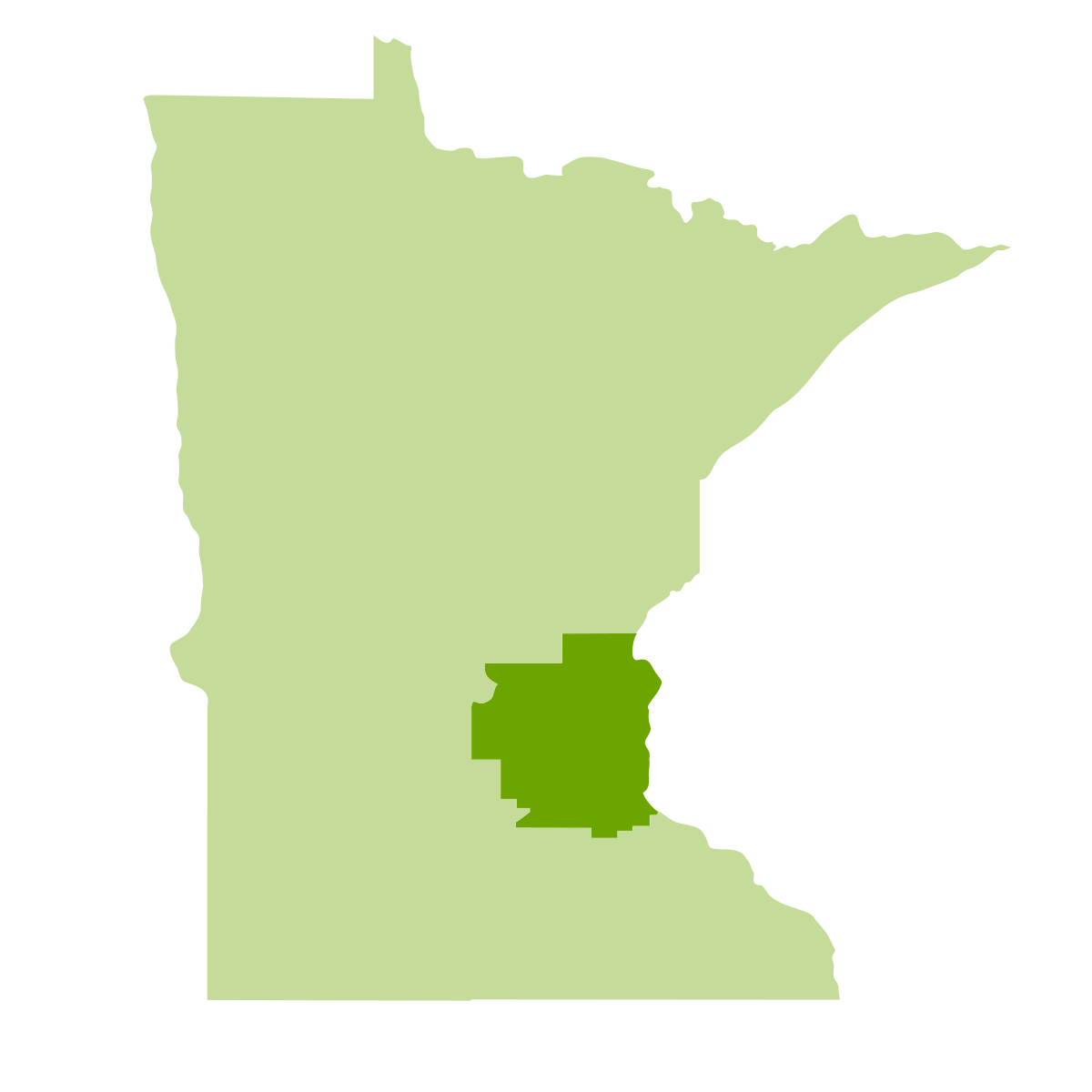
  • In 2007, CERTs was written into state statute. CERTs awarded a total of $300,000 in seed grants for clean energy projects throughout the six greater Minnesota regions during 2008 and 2009. The legislature also provided for the expansion of CERTs to the Twin Cities metro area.
  • Over 2,000 individuals participate in CERT meetings and educational forums, and volunteer thousands of hours to the CERTs project.
  • According to a 2007 survey, 95 percent of active CERTs members believe that the program has been a success in the state of Minnesota.
  • On May 7, 2009 Governor Pawlenty signed the Environment Budget bill, which included $1.25 million over the biennium for CERTs to help local groups develop project ideas, find technical and financial resources, and organize and implement projects in their communities.
  • In 2009, CERTs received $450,000 over two years from the Bush Foundation to help Minnesota communities save 30.7 billion BTUs each year.
  • In January 2010, CERTs announced funding for $280,000 in seed grants to all seven regions in Minnesota.

Download CERTs Milestones >>

5. How do the Clean Energy Resource Teams Operate?

 
Each CERT Region has created their own Operating procedures, but they all have some common elements. Each region’s operating procedures are available from their regional page. Example of operating procedures.

  • Purpose-driven: To connect citizens with the technical resources they need to identify and implement community-scale energy efficiency and clean energy projects, in cooperation with CERTs Partners.
  • Structure: Comprised of a Steering Committee; Officers and Advisory Boards; Staff; Base operation funding provided by the Minnesota Department of Commerce.
  • Meetings: Teams meet quarterly, Steering Committees more often.
  • Funding for Projects Review: The Steering Committees will assist in the review of project proposals for regional seed grant funding for clean energy projects.

6. CERTs Phases

 
Phase I (2003-2005)

  • Convening meeting, conferences and tours: forums for mutual learning, engaging multiple stakeholders groups
  • Gathering data: Where do we stand and what are our best options?
  • Developing missions: Where do we want to be?
  • Prioritizing projects: How do we create change?
  • Writing Strategic Energy Plans: Giving the region a starting point & outlining a path forward.

Phase II (2005-2007)

  • Disseminating information from the strategic energy plans
  • Conducting education and outreach on conservation, energy efficiency, renewable energy and how people can make a difference in their own communities
  • Stimulating project development
  • Serving as a community resource to connect projects with technical resources

Phase III (2007-beyond)

  • Stimulate and catalyze project development by:
    • Serving as a community networking hub
    • Offering informational and educational forums
    • Providing seed grant funding ($300,000 2008-2009)
AttachmentSize
CERTs Appropriation Language211.84 KB
CERTs Operating Procedures29.2 KB
Report on the CERTs Project - Phase One87.45 KB
Report on the CERTs Project - Phase Two69.34 KB
CERTs: Local Energy Systems and Civic Participation127.59 KB
CERTs Factsheet1.76 MB
CERTs Milestones761.21 KB
CERTs_Factsheet_2010.pdf1.76 MB