Community Energy Ambassadors

A big project with tiny homes

May 2026

All across Minnesota, Community Energy Ambassadors are working on clean energy projects within their communities. Some are becoming CERTified Community Energy Ambassadors by working together as a cohort, but others are going it alone with efforts that match their skill sets and interests. Richard Pierce from Embarrass, Minn., completed the training in early 2026, and is teaching others sustainable building practices by building a tiny home.

Pierce has a lot of irons in the fire: a potato farmer, a short story writer, a volunteer board member with the Regional Sustainable Development Partnerships, and now, a Community Energy Ambassador with the Clean Energy Resource Teams (CERTs).

“Maybe time for a blog,” he muses. “What the heck is a blog? Sounds like a jellyfish washed up on an ocean beach.”
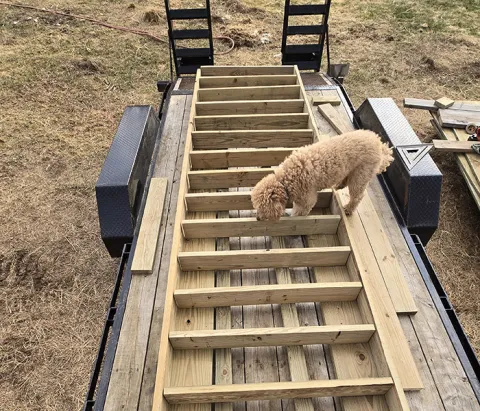

Pierce is putting together a series of “Tiny Home Tuesdays” with the goal of teaching while doing. “We’re sizing it 16x28 feet but it could potentially be adjusted down to 14x24 feet because we are building the pieces on one site and then will be transporting and assembling it on another site. The final size and location depends on if someone wants to walk up and buy this one. Then we can build a second one!”

The course will meet once a week for three months. His notes below lay out some of the topics he and guest speakers will cover with participants (we CERTs folks get especially excited about number six!): Dog with building materials

  1. Design and building a pressure treated foundation. The program will also look at Structurally Insulated Panels (SIP), monolithic slabs, and ground source heat added into the equation.
  2. Framing, wall construction, window and door installation, and sheathing.
  3. Interior framing, interior door options, and floor layout. 
  4. Engineered trusses, and floor joists.
  5. Exterior siding, trim, and roofing options. 
  6. Passive solar, PV systems, and solar landscape lighting.
  7. How to build green using locally sourced materials. 
  8. Site visit, site design, and site development costs.

“I’m hoping to have a classic barn raising at the end of harvest season for the tiny home,” Pierce says. “We’ll take the frame and the foundation to the site and put the walls and panels into place.”

The tiny home project that Pierce is leading is just one example of projects that Community Energy Ambassadors are doing as a final project to become ”CERTified.”

Keely Rau, program associate with the Great Plains Institute, has been coordinating the program and assisting people going through the CERTified Community Energy Ambassador process. “We are seeing so many creative and innovative projects like Richard Pierce’s coming through the program. There are Community Energy Ambassadors who are helping promote the Solar for Schools and Solar on Public Buildings grants, distributing Home Energy Guides in the Free Little Libraries in their communities, coordinating clean energy plans for rural towns, creating personalized electrification plans for their friends… The list goes on and on!”

As for Pierce, he is gearing up each week for “Tiny Home Tuesday,” which he teaches at the old Waasa Town Hall building. “It feels good to be back in the classroom, in a school building with such history. Teaching in a community rich with farming tradition, logging, and pride.”

Sign up for Energy Stories

We encourage reuse and republishing of this story. All Clean Energy Resource Teams stories are made available under the Creative Commons Attribution license, meaning you can share and adapt the work as long as you give us credit. We'd also love it if you link back to the original piece. Have questions or want to chat? Drop us a line.