Menu
CERTS SEED GRANT

Black youth reclaim clean energy

August 2026

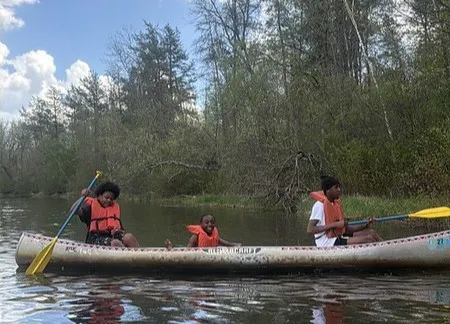
 Three young Black men waving paddles on their canoe on the water. 2026.Are you listening? Are you even interested? Middle school is hard enough. From TikTok to grades there’s a lot to learn. On top of that, many kids navigate challenges outside the classroom, from family and financial stress to neighborhood violence. Against this backdrop, clean energy topics like solar panels are the last thing on their mind.
Peace Mitchell and her partner Michael Birchard run Frog Tree Farm, one of the oldest multigenerational Black owned farms  in Minnesota; they’re showing historically underserved  youth how they can use clean energy to build social, environmental, and economic capital for themselves and their community. Not by teaching, but by demonstrating. 

Clean Energy: What is it and how can it help?

Birchard co-leads Friends of Frog Tree Farm. This nonprofit extends the farm’s reach into the Twin Cities and provides programming for historically underserved youth through workshops and farm visits. Birchard started visiting the farm 35 years ago and spent most of his career as a teacher and administrator in colleges throughout the metro area teaching race in America, democratic citizenship, and community organizing.

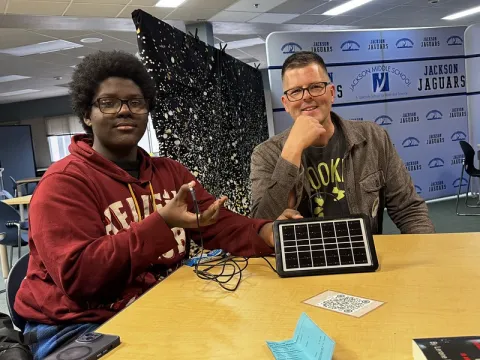
: A middle aged white man sits next to a Black young man showing a phone plugged into a small solar panel. 2026Birchard understands the connection between social justice and clean energy. “Yes, there’s this idea that there are blue bins to put your recycling in, but for many from low-income communities recycling and upcycling is just a way of life – when you're done with a mayonnaise jar, that becomes a drinking glass. It doesn't go into the recycling bin, it becomes a functioning item in the house.”

Friends of Frog Tree Farm saw how reusing items could fit under the term “clean energy” and that when youth understood the term, they were empowered to take advantage of it. This inspired the start of the Youth Energy Leaders program. Reaching more than 300 middle and high school students from historically underserved communities, this program received a 2026 Clean Energy Resource Teams (CERTs) Seed Grant to support its in-school workshops, annual career fair, and field-based retreat to the farm.

Olamide Salu, a participating west metro student and a Youth Energy Leader intern says, “This has been an eye opening experience for my future.” Salu participated in all of the program’s events and is now considering a career in energy and environmental sustainability. “I hope to carry the lessons I learned into my future to make a positive impact on my community.”

Workshops: Youth gather to rest and learn

When Birchard began working in schools, he focused on violence reduction and education. “We’d help the students recognize their culture and understand who they are. But also we’d tie it in with opportunities and building social capital. Part of building social capital is recognizing the importance of clean energy.”

Kobe Mustapha, a participating student and intern says, “Many school setups can seem passive. You sit, absorb information, and take a test, but these experiences were completely different.”

Mustapha’s experience is intentional. Birchard says that the workshops are a balancing act of education and love. “The biggest thing is to be a caring adult.”

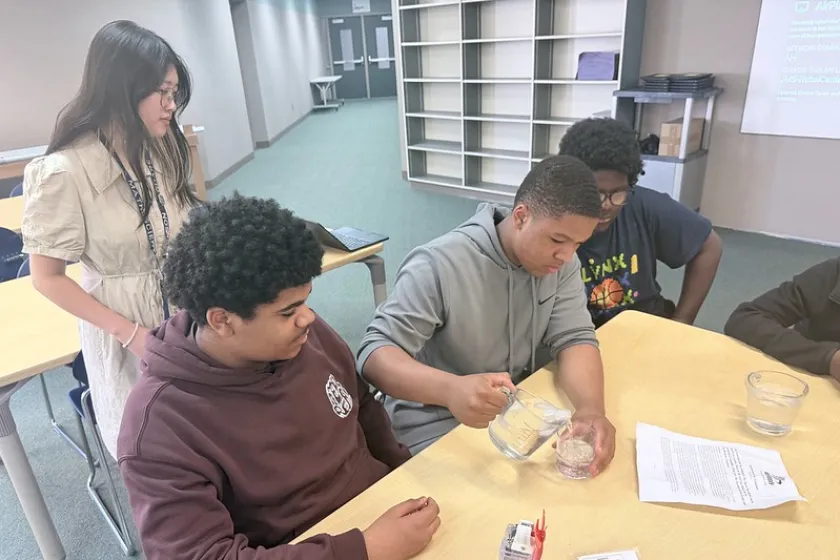
Three students measure water into a cup in a classroom as a teacher watches over.

Students engage at Friends of Frog Tree Farm workshops at Jackson Middle School. 2026.

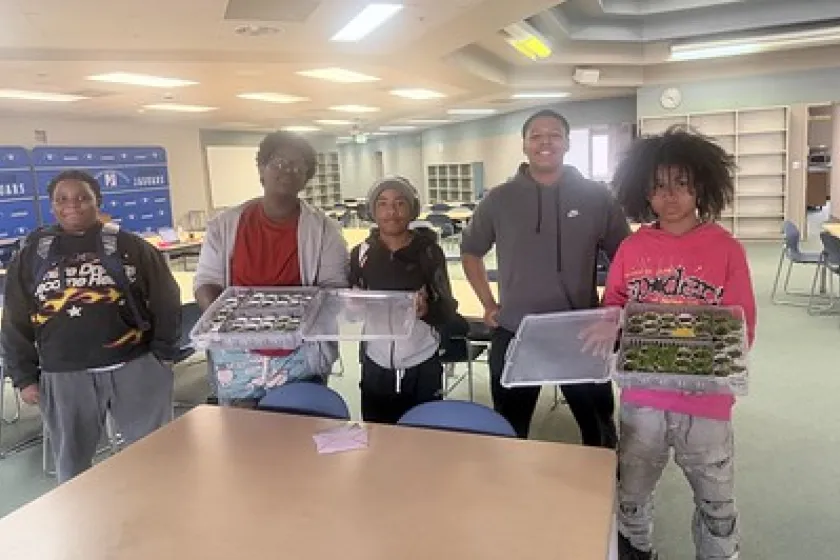
 Five youth hold up two boxes of small plants growing from disposable condiment paper cups in a classroom.

Young Men’s group at Jackson Middle School hold plants at a Friends of Frog Tree Farm workshop. 2026.

Friends of Frog Tree Farm leads around 40 workshops annually with 10 focusing on clean energy in 2026. Each workshop starts with the Black National Anthem and discussions of Black history, where students learn about Black scientists and innovators, like Frederick McKinley Jones who invented the first refrigerated long-haul trucks. Then they head to a park or the gym to hang out. This is where Birchard brings hands-on tools to spark interest, things like a weather radio or solar phone charger, which can lead to bigger concepts like solar installer jobs.

Students also attended the Fannie Lou Hamer Career Fair and Celebration where they were encouraged to explore clean energy jobs and actions to improve energy use at home.

“I think it’s something our society tends to overlook,” says student Olamide Salu. “Most people think of energy as gas for our cars or solar panels, but we don’t always remember the energy our bodies need or the work farmers put into producing the food that fuels us.”

Farm Visit: A warm welcome to the ancestral ways

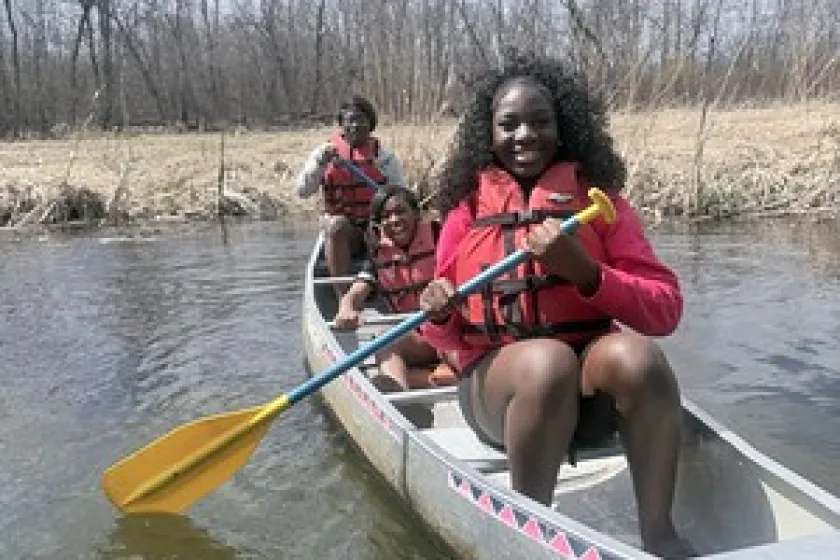
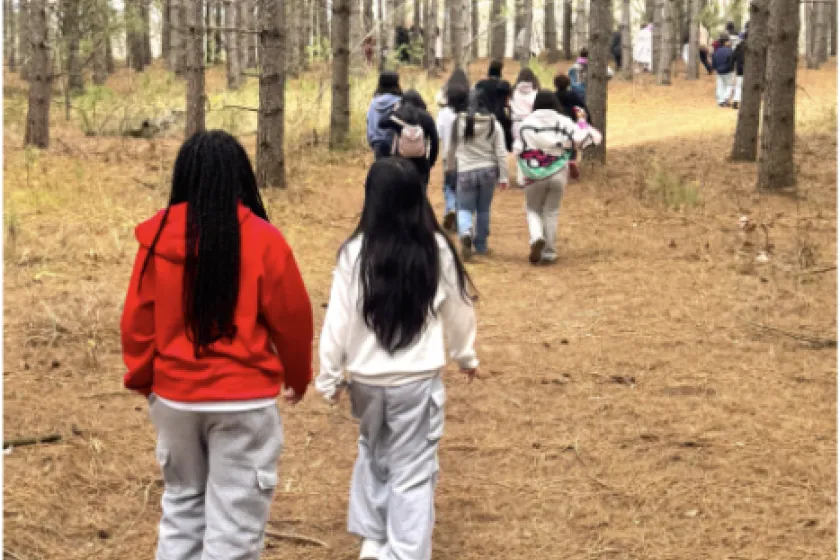
Three young Black women smiling in a canoe on the water. 2026.The program traded the classroom for the countryside, taking 20 youth out to Frog Tree Farm where Birchard and Mitchell welcomed them to demonstrate how sustainability works in their lives. They shared stories about how the farm developed over the years and how they’ve transitioned or integrated traditional ways with modern ones.

"When our kids were little, this is how they got the water. They didn't turn on a faucet that had an electric pump. They used their hands,” Birchard had explained.

For many students, this visit was a way to reconnect with traditional knowledge, such as using hand tools and shared labor. The visit emphasized that clean energy is about more than just high-tech gadgets; it is about resourcefulness, sustainability, and respecting the land’s limits.

The visit also looked toward the future of Frog Tree Farm. Students reviewed the planned sites for a solar energy field and the Minnesota Black Rural History, Art, Culture, and Heritage Trail, helping them see how clean energy, social justice, and cultural preservation can take root together on the land.

“You're finding different ways to connect with them so that they feel connected too. They're coming to see their trail, they're coming to learn about their health, their history, their culture, and who they are. We're intermixing these important values through Peace and her farm,” says Birchard. And the impact is spreading beyond the students.

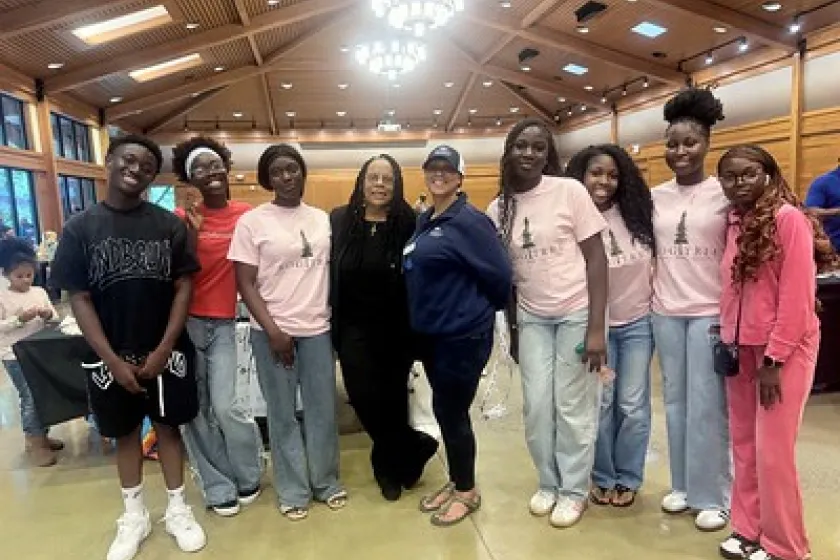
Nine people pose for a photo. A few are wearing Frog Tree Farm t-shirts. 2026.

Young men and Young Women’s groups gather at a Juneteenth Celebration with community leaders at Champlin Park High School 

Handwritten thank you card reads, “Dear, Aaron Backs, Heidi Auel, and Margaret Kozak Your investment in us has made a difference in our group and we honest are grateful for the actions you have taken to be able to support our group. Thank you for everything you have done for us. Sincerely, Jemaris Johnson and the Young men of champlin park.”

Thank you note from students at Champlin Middle School. 2026.

Survey results show that nearly half of the students (48.7%) reported talking with their families about reducing energy use and 64.5% took steps to check for energy waste at home.

Students from one school wrote to the Clean Energy Resource Teams staff to express their appreciation for the program, which helped them step outside the classroom and discover clean energy, not as a technical term, but as a practical tool for their future.

Sign up for Energy Stories

We encourage reuse and republishing of this story. All Clean Energy Resource Teams stories are made available under the Creative Commons Attribution license, meaning you can share and adapt the work as long as you give us credit. We'd also love it if you link back to the original piece. Have questions or want to chat? Drop us a line.