Check out these induction cooking kits from the Anoka County Library!

February 2026

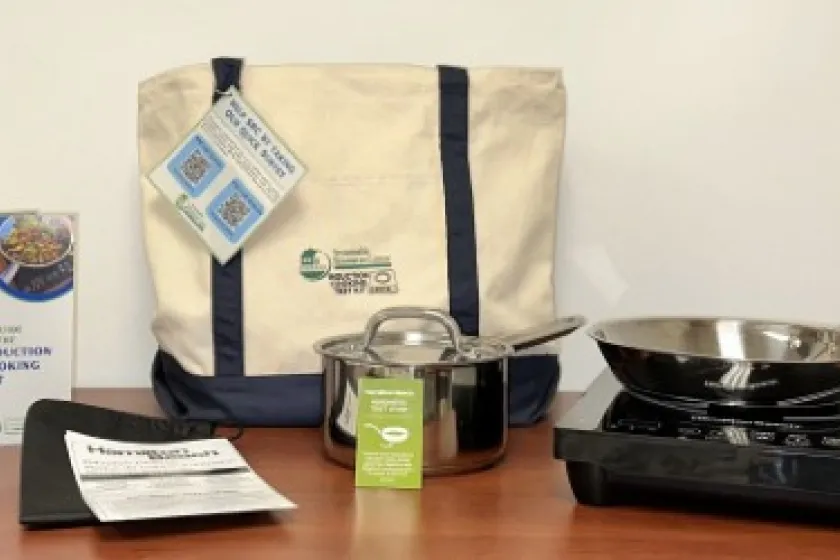
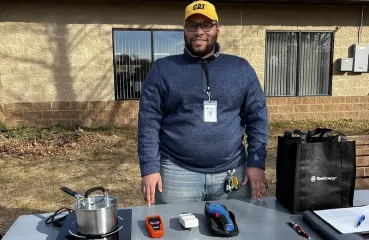
Beginning in February 2025, patrons of the Anoka County Library’s eight member branches might have noticed a new and mysterious canvas tote bag among their library’s cookware and hobby collections. At least 100 patrons have checked out that tote bag and were delighted with what they found: a fully functional induction cooking kit, complete with induction-compatible cookware, an informational brochure, and an induction cooktop. People who took a chance on this kit have come back beaming, excited about induction stoves and grateful for the chance to test them out for free at home.

“One of our patrons here at St. Francis raved about it when she returned the kit to us, saying it was amazing and made her consider looking into more permanent induction cooking tools at home. She and her husband both enjoyed cooking their meals with the kit.” 

— Anoka County Library staff

How did it get started?

The library’s Induction Cooking Kit Program began as a pilot program developed by the Sustainable Resources Center (SRC), a Minneapolis-based nonprofit focused on creating healthy and energy efficient homes. SRC was intrigued by similar pilots offered in California through utilities and library systems that allowed people to have direct, hands-on experiences with induction cooking. In 2024, Emily Breuch, then a summer intern at SRC, started developing a program that might work in Minnesota.

“We were looking to create something similar here in Minnesota, because we thought it'd be a really good service for a lot of Minnesotans, both in the Twin Cities and beyond in Greater Minnesota as well,” says Breuch.

Gas and electric stovetops rely on an external heat source (think an open flame or a hot coil) to transfer heat to your cookware, losing lots of heat to the atmosphere while you cook – the reason cooking on a hot summer day can make you so sweaty! Induction cooktops instead generate a small electromagnetic field that produces heat directly in the bottom of the cookware itself. This means very little energy is lost in the heat generation process, which gives induction cooktops their reputation as a highly energy efficient technology. 

Induction stoves have many safety benefits as well: the cooking surface cools down quickly, the lack of open flame means no air pollutants such as nitrogen dioxide (NO2) are being emitted, and they don’t power on unless compatible cookware is placed on the stovetop, lowering the risk of burn injuries and making them safer for kids. 

Induction cooking kit

Induction cooking kits

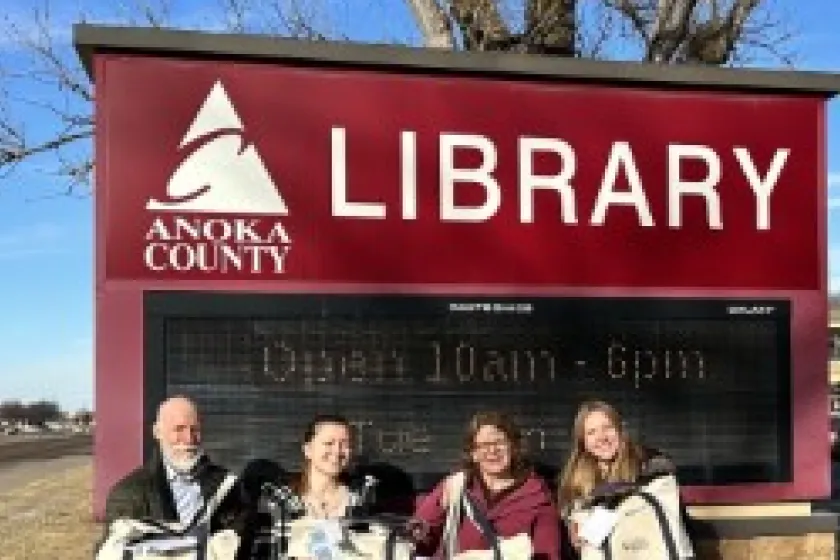
Posing in front of Anoka Library with induction cooking kit

Induction cooking kits in front of Anoka Library

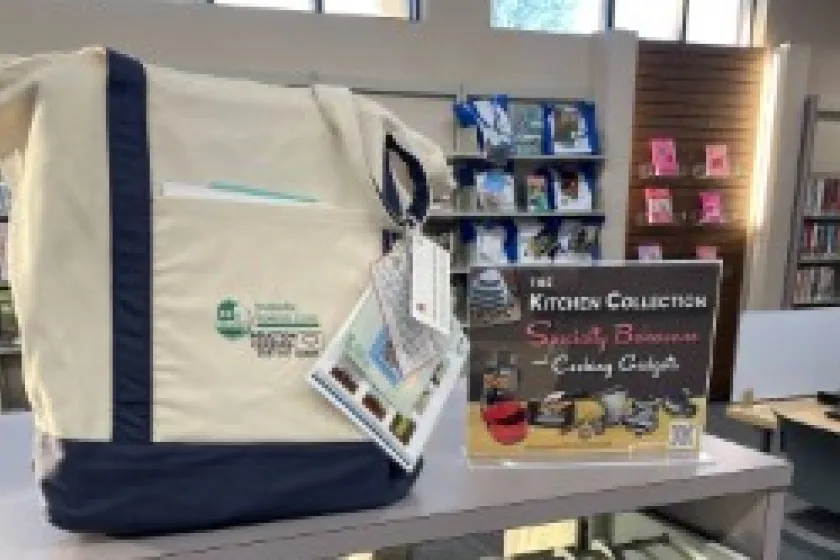
Cookware kit on Library shelf

Cookware kit on library shelves

“We already have a circulating cookware collection and an [industrial] kitchen at one of our facilities… So it seemed like a natural fit for us, and we worked with the team at SRC to refine what would work for us and what wouldn't.” 

— Sarah Hawkins, Anoka County Library

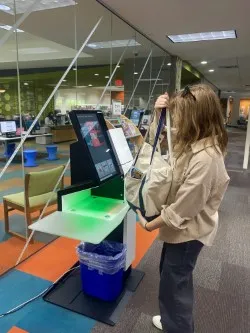
Person operating the Anoka library kiosk.The partnership between SRC and the Anoka County Library was instrumental to the program’s success. Library staff helped make the kits more user-friendly and increased the kits’ visibility by incorporating them into the library’s existing culinary programming. Breuch and Emilie Chapdelaine, both now hired on as full-time sustainability services staff at SRC, added that they’ve been able to easily expand the program to other libraries since thanks to the collaboration and input from the Anoka County Library. 
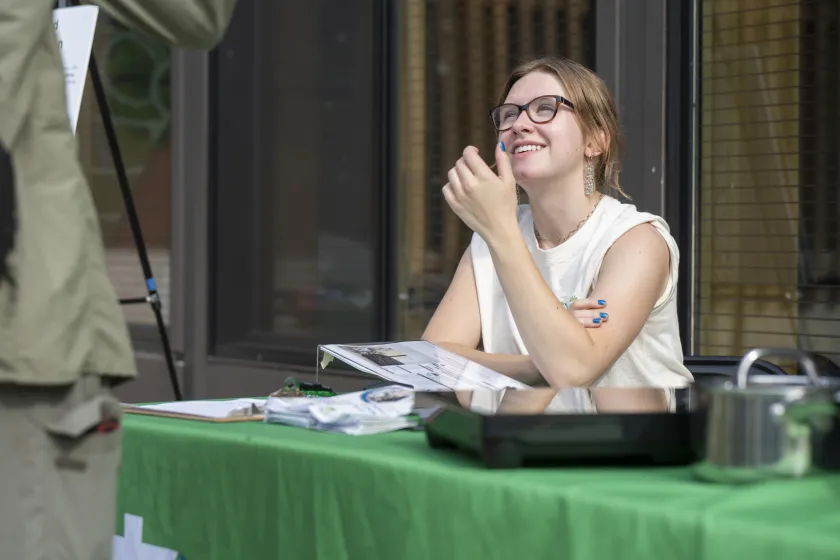
“I think that libraries are a really good partner to have, because they already have a system for integrating free, usable items into their collections,” explains Chapdelaine.

The pilot program ran through the summer of 2025, and was a resounding success — now, it’s become a permanent part of the Anoka County Library catalog. Surveyed patrons overwhelmingly responded they were satisfied with their experience and thought induction cooking would fit well with their lifestyle.

“Every new person who knows about induction and is thinking more consciously about the [air quality] of their home and their kitchen space is another win,” shares Emily Breuch, SRC.

Even Hawkins, Assistant Director at Anoka County Libraries, shared that she is now planning on buying an induction stove when she remodels her kitchen. And she would never have known about it if she hadn’t said yes to SRC’s initial email last year!

Emily B at Fresh Frolic
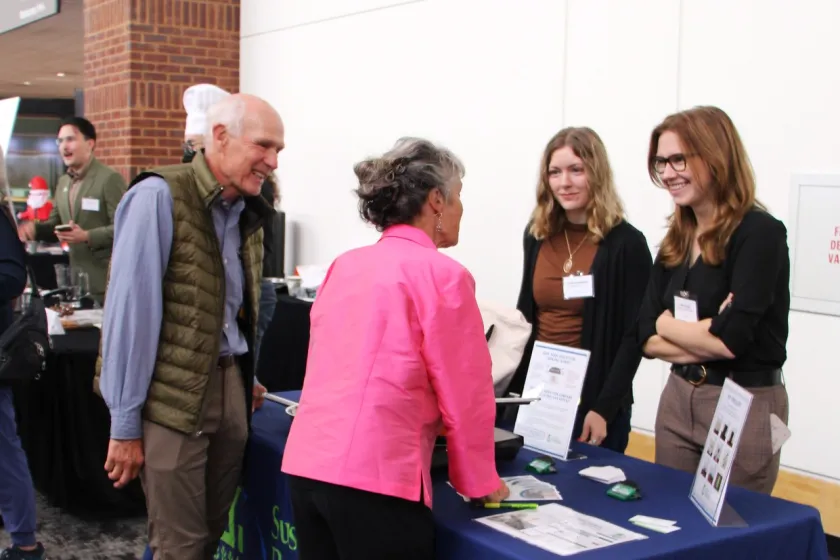
Fair of the Future
Ramsey County Energy & Electrification Resource Fair

Success and expansion

SRC has built partnerships with three new library systems, meaning induction cooking kits are now available at more than 50 library locations statewide! 

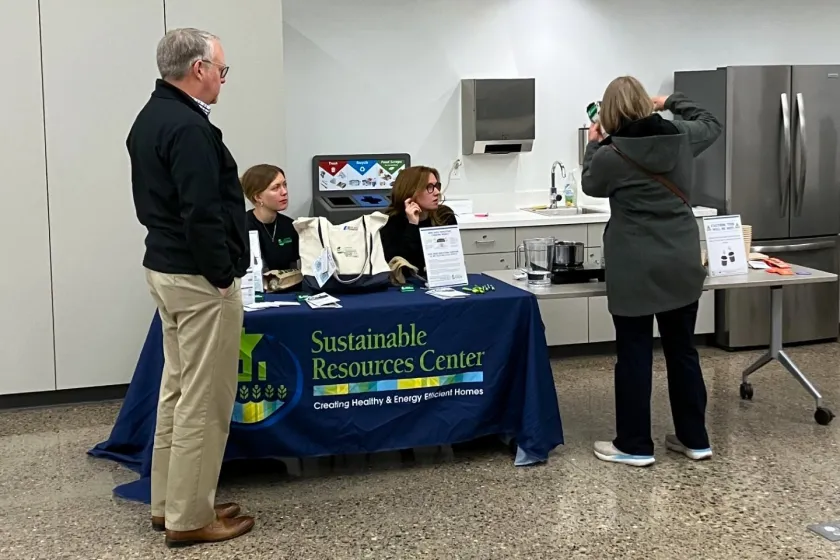
Sustainable Resource Center Booth Patrons of the Plum Creek Library System in southwestern Minn., Arrowhead Library System in northeastern Minn., and Great River Regional Library System in central Minn. can now find induction cooking kits on the shelves or put them on hold at their local library.

SRC’s vision for this initiative is to expand the Induction Cooking Kit Program across the state so that every Minnesota resident can access induction cooktops through their local library. Many Minnesota libraries have expanded their collections beyond books to offer “Library of Things” collections, so if induction kits aren’t available at your library yet, tell your librarian about the program and encourage them to get in touch with SRC.

Libraries are excited to offer items that improve patrons’ lung health and home energy efficiency, while avoiding the cost barrier associated with induction stoves. As part of the circular economy, libraries are a wonderful resource for people who want to try something out or don’t want to purchase something only to use it once and put it on a shelf. Sarah Hawkins summarizes “If you have a need, think of whether your library can meet that need for you.” 

Inquiries and any questions about SRC’s Induction Cooking Program can be emailed to [email protected].  

Sign up for Energy Stories

We encourage reuse and republishing of this story. All Clean Energy Resource Teams stories are made available under the Creative Commons Attribution license, meaning you can share and adapt the work as long as you give us credit. We'd also love it if you link back to the original piece. Have questions or want to chat? Drop us a line.