Menu

La Crescent powers more than half of its city with clean energy

May 2026

For 15 years, Jason Ludwigson drove past the local Aquatic Center and saw a missed opportunity. Today, he sees 30 kilowatts of solar panels.
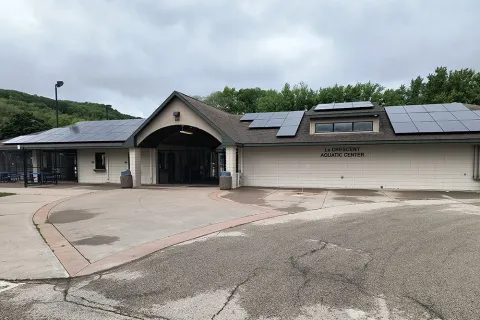
Aquatic Center“It’s the best building the city owns for solar,” says Ludwigson, a resident of La Crescent since 2009. “It faces dead south, it has no shade, and its peak energy use happens exactly when the sun is brightest. It’s as good as it gets.”

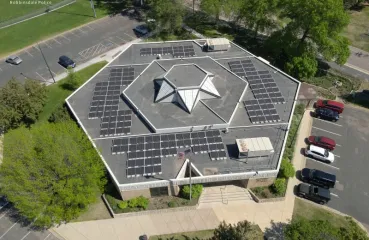
La Crescent (pop. 5,200) has become a regional leader by powering two-thirds (66%) of city operations on renewable energy. In addition to clean energy efforts by citizens, the public pool is one of seven city-owned buildings with solar power including the fire station, a park pavilion, and the animal shelter contributing to the city’s clean energy transition.

The most important lesson from this "Apple Capital" isn't just about big city-projects — it’s about how they’ve made clean energy accessible to every resident, often for little to no cost.
 

La Crescent gets started with solar

The journey started in 2015 when La Crescent joined the Minnesota GreenStep Cities program (GreenStep is free and open for any city or Tribal nation who wants to join). Leading by example, the city set an environmental stewardship goal in its 2016 Comprehensive Plan, giving itself a mandate to experiment with clean energy.

But policy on paper only works if you have locals behind it. To turn the mandate into reality, the city relied heavily on the energy of local residents. Former Greenstep committee member Reid Smith was one of those eager to step up. “I had worked hard on reducing the carbon footprint of my own home and had learned a lot during the process,” says Smith. “After that, I was motivated to help the town reduce their carbon footprint and joined the Greenstep Committee.” 

Alongside Smith, Ludwigson and other residents led the city’s efforts to improve sustainability and reduce the cost of living. 

Still, the town was cautious about spending taxpayer money on new technology, so they outsourced the funding and installation of the solar panels using power purchase agreements.

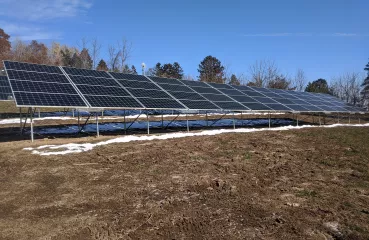
The fire station installed roof mounted solar panels in 2017. "The upfront cost to the city was zero," explains Ludwigson. "A developer owns the panels, and we just buy the cheaper power. It proved the concept to the council without any financial risk."

In 2021 the city added solar panels to the animal shelter, radium plant and public works facility using the same method. “The first system is the hardest,” says Ludwigson “once it’s installed, you can point to the savings and show that the model works. Then, everyone asks to do more.”

Officially hired as the town’s Sustainability Coordinator in 2020, Ludwigson knows a lot about the cost breakdown of installing clean energy infrastructure, like solar panels. “A power purchase agreement can cut start-up costs and save you roughly 20% on your energy bill,” says Ludwigson, “but in the long run, you save more money by owning the panels, especially with the available rebates and tax credits.”

Knowing that the cost of ownership was a high hurdle, Ludwigson reached out to Peter Lindstrom and Jennifer Lindahl of the Clean Energy Resource Teams for assistance. With their guidance, the city received three grants from Minnesota’s Solar on Public Buildings program. This funded the solar array at the Aquatic Center. Ludwigson still uses the template Lindstrom and the Clean Energy Resource Teams developed to apply for grants today. 

More than solar panels: going green

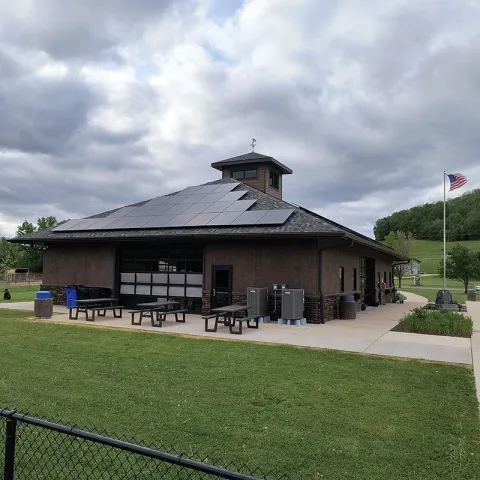
Large brown building in a park has a slanted roof with solar panels on two sides.The city council first developed a taste for clean energy because it saved them money. “Now, the council expects it. If we built something today and didn't include a heat pump, they’d ask why,” says Ludwigson. 

Hooked on clean energy savings, the city selected an all-electric design for their new pavilion at Wieser Park. Instead of a traditional furnace, the pavilion uses cold-climate heat pumps, and instead of paying for energy from the grid, the city saves with solar panels (also funded by the state grant). As the city’s first net-zero building, the pavilion is already a huge success operating entirely on clean energy while serving as a community hub for weddings and service groups.

That momentum is now heading toward the local schools. This summer, La Crescent-Hokah Elementary is scheduled to install its own 124-kilowatt solar system funded by the state’s Solar for Schools program. By partnering with Clean Energy Resource Teams for technical assistance and curriculum development, the school successfully installed a solar system that will not only save the district money, but also become a classroom tool. As kids in town play at the pool on a summer day or study the photoelectric effect at school, they aren't just seeing solar panels, but a community that promises to set them up for success.

A Culture of Sustainability

As Lindstrom says, “La Crescent is the little city that can.” 

It’s not just the city council working to cut costs and lower electricity bills but the whole town. Whether it’s electric police cruisers or an electric Zamboni, La Crescent is proving that sustainability isn’t just for big cities; it’s a practical, cost-saving strategy for small towns.

With two-thirds of city operations running on clean energy, they’ve shown that all you need is a south-facing roof, a little persistence, and the belief that a cleaner and brighter future is worth the energy. 


Stay in the loop!

Get updates on clean energy ideas happening in communities near you, along with ways to pay for those ideas, events that will keep you connected, and more.

We encourage reuse and republishing of this story. All Clean Energy Resource Teams stories are made available under the Creative Commons Attribution license, meaning you can share and adapt the work as long as you give us credit. We'd also love it if you link back to the original piece. Have questions or want to chat? Drop us a line.