Prairie Island Indian Community makes waves of progress towards net zero

October 2025

Photos courtesy of Prairie Island Indian Community.

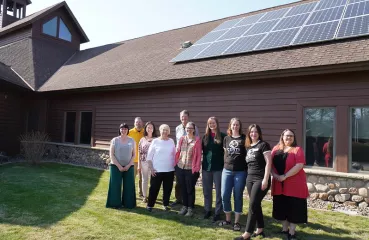
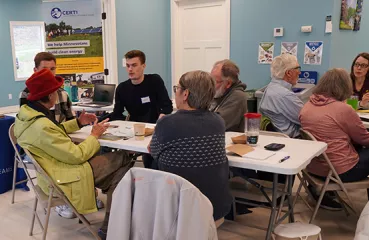
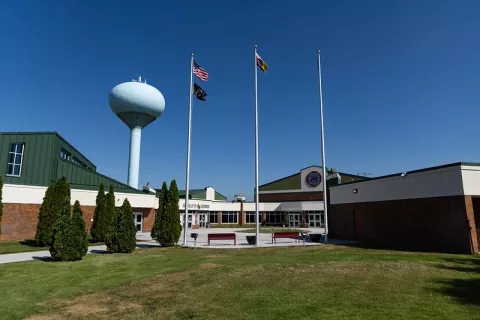
Prairie Island community center, photo courtesy of Prairie Island Indian CommunityOn a recent summer day, the Prairie Island Indian Community welcomed Minnesota’s clean energy community to their home. Attendees gathered to share ideas and spark new momentum for Southeast Minnesota’s energy future.

“It’s always great to get together with others working on clean energy and sustainability,” says Andrea Zimmerman, Prairie Island’s net zero program manager. “It’s all about core values that we share and knowing we’re not navigating this work alone.”

More than 40 people attended the event, which began with a welcome from Tribal Council member Valentina Mgeni. Zimmerman led a discussion on Prairie Island’s historic net zero goals, including projects already in motion and on the horizon. Prairie Island’s clean energy current has been strong since 2021, when the community became one of the first Tribal nations to set a goal of achieving net zero carbon emissions.

In partnership with Prairie Island, the Clean Energy Resource Teams (CERTs) helped host the gathering, adding to a collaboration that runs deep. 

“CERTs has been a longtime partner of ours, going back to when the community first set its goal,” says Zimmerman. “CERTs has been a valuable network for Prairie Island, a channel for us to get ideas and exchange contacts. I think the event was really a continuation of that.”

Southeast CERT Coordinator Jennifer Lindahl proposed the event be held at Prairie Island, hoping other communities will take inspiration from the Tribe’s trailblazing clean energy work.

“We are so grateful they accepted,” Lindahl says. “Prairie Island is approaching change on a whole new level, but they aren’t fan faring about it. They’re looking inward and transforming their own infrastructure on a large scale. It’s remarkable leadership that we can all learn from.”

What does “net zero carbon emissions” mean?

When humans use certain types of fuel, like burning coal or driving gasoline-fueled cars, gases like carbon dioxide are released. Trapped within Earth’s atmosphere, the gases damage the ozone (or Earth’s natural shield from the sun), leading to increased heat and climate impacts on Earth. 

Net zero carbon emissions, or “net zero,” refers to the balance between the amount of carbon dioxide released into Earth’s atmosphere and efforts to counter or halt the release. To reach net zero, communities work to sharply reduce the carbon they produce and then balance out whatever remains. This often includes using clean energy instead of fossil fuels, improving energy efficiency, and protecting forests that naturally absorb carbon.

With our Net Zero Project, we aim to eliminate or offset carbon emissions produced across the community. For Prairie Island that means an annual reduction of more than 20 million pounds of carbon—equivalent to eliminating emissions from 75 oil tanker cars that pass through Prairie Island tribal land each day.

From Prairie Island

The current carrying the vision

Members of the Prairie Island Indian Community descend from the Bdewakantunwan (Mdewakanton) Band of Eastern Dakota, or those who were “born of the waters.” For generations, Prairie Island families have lived along the Mississippi River, where water continues to represent life, renewal, and connection to all living things.

Today, that connection takes on new meaning. The community faces increased flooding, extreme weather, and other pressures that make these challenges even more urgent.
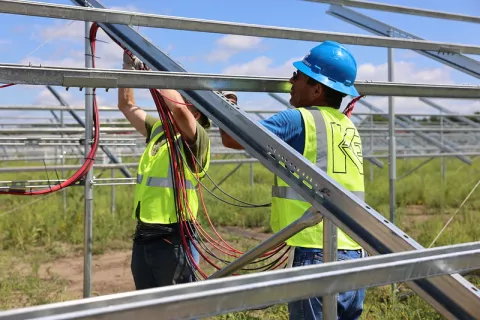
Prairie Island community members helping build the solar array, photo courtesy of Prairie Island Indian Community“I think many in Minnesota are familiar with the history at Prairie Island and the community's proximity to the Prairie Island Nuclear Generating Plant,” says Zimmerman. “The plant was placed next to the community more than 50 years ago without proper tribal consultation, and presents potential risks to the community.”

Yet the Tribe refused to be limited by this history. Zimmerman says the setback has strengthened the community’s resolve, reinforcing their commitment to protect and preserve the natural world.

“Prairie Island’s net zero work is the community’s response,” she explains. “It’s the Tribe’s way of expressing energy sovereignty and embodying the community's values,” Zimmerman says.

“That’s part of what makes their work so outstanding,” Lindahl says. “They’ve taken the situation and turned it into positive action.”

Four years after setting an ambitious net zero goal, Prairie Island is seeing real results. The community is reducing carbon emissions through commercial geothermal systems, solar energy, and energy efficiency initiatives. At the same time, Prairie Island has restored more than 400 acres of native prairie and invested in wild rice, shoreline, and oak savanna projects. Their efforts also extend into tribal members’ homes and workforce development, creating ripple effects throughout the community.

Key projects and milestones

  • 5.4-megawatt solar project
    Live since May 2024, the project delivers 100 percent renewable energy to the local utility through a power purchase agreement. It produces enough clean electricity to power about 725 Minnesota homes annually.
  • Residential energy audit and upgrade program
    Launched in 2024, the program helps tribal members reduce utility bills and carbon footprints while improving home comfort. 30+ households have received energy audits to date, with installations of insulation, HVAC systems, and other upgrades ongoing.
  • Home Energy Career Training
    Hosted in Summer 2025, co-funded by Xcel Energy, and led by the Center for Energy and Environment, the 3-week session trained community members and their relatives in residential energy performance. All participants passed the Building Science Institute’s Building Science Principles exam to receive an industry credential.
  • Treasure Island Resort and Casino conversion
    Prairie Island is in final stages of construction on a project that converts the one-million-square-foot facility from natural gas to a geothermal and cleaner electric system for all heating, cooling, and hot water needs.

“Our Net Zero effort is a transformational project, not just for our Tribe but all of Indian Country,” said Tribal Council member Mgeni. “Our members played an important role in shaping the project vision and priorities, and now its implementation as we seek to create balance with Ina Maka, or Mother Earth.”

2025 Clean Energy Ideas Exchange with Prairie Island Indian Community and Clean Energy Resource Teams

Photo courtesy of Prairie Island Indian Community

CERTs 2025 clean energy event, photo courtesy of Prairie Island Indian Community


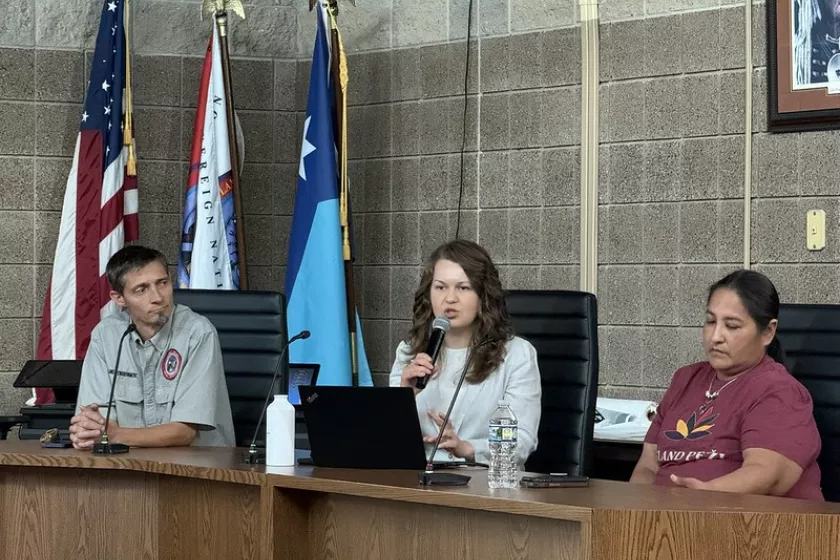
Gabe Miller, manager of land and environment; Andrea Zimmerman, net zero program manager; and Tribal Council member Valentina Mgeni at the event.

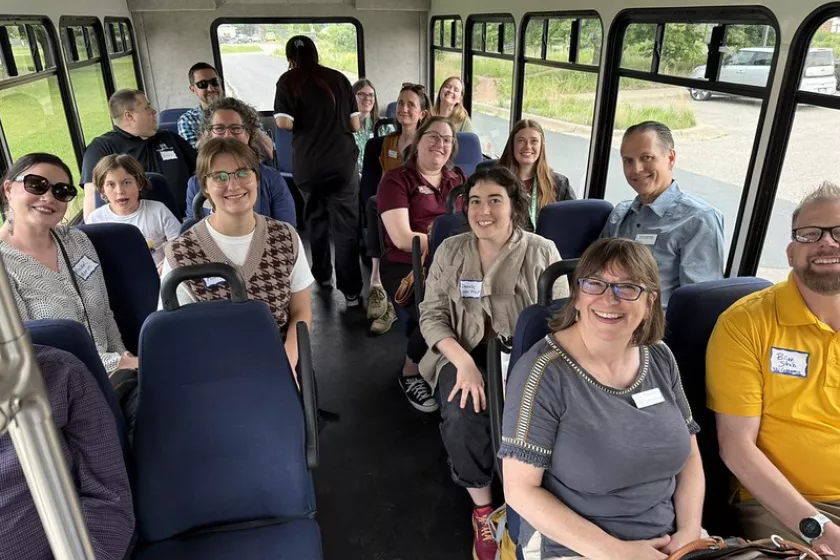
The event included a tour of Prairie Island Indian Community’s solar infrastructure and other advancements.


The event included a tour of Prairie Island Indian Community’s solar infrastructure and other advancements.

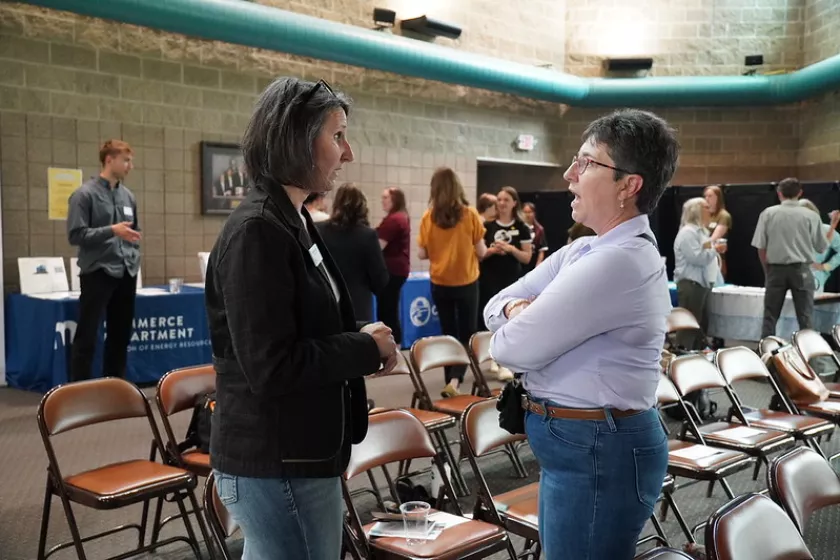
Jennifer Lindahl engages with community members at the event.


Jennifer Lindahl engages with community members at the event.

Tides of change and accomplishment

Prairie Island’s vision and results were open to all during the summer event with CERTs. The programming offered a closer look at how their projects are shaping the land and community. Additionally, attendees connected with representatives from industry leaders, like Citizens Utility Board, the University of Minnesota Extension Regional Sustainable Development Partnerships, Minnesota GreenStep Cities & Tribal Nations, and Resilient Red Wing.

“It’s valuable to share our work, but what matters most are forums like these where people can connect, learn from each other, and collaborate,” says Zimmerman. “The local clean energy industry is so creative and solution-focused, and it was wonderful to see that in action at the event.”

Lindahl says the event was a great success and a generous opportunity to the region.

“Prairie Island continues to show us all what’s possible when a community leads with vision, persistence, and a deep respect for the land and future generations,” she says. “This event was a chance to celebrate Prairie Island’s hard-won achievements and look to the future together.”
“There’s still a lot to achieve going forward,” Zimmerman says. “But it was wonderful to take a step back and reflect on how far we’ve come.”

Sign up for Energy Stories

We encourage reuse and republishing of this story. All Clean Energy Resource Teams stories are made available under the Creative Commons Attribution license, meaning you can share and adapt the work as long as you give us credit. We'd also love it if you link back to the original piece. Have questions or want to chat? Drop us a line.