Vergas: A central Minnesota town takes bold steps toward a resilient future

February 2026

This is an excerpt from the University of Minnesota Extension's feature on the City of Vergas by Emily Haeg Nguyen.

Small-town feel

“People here take care of each other,” says Vergas Mayor Julie Bruhn. As the leading elected official, Bruhn is working to help determine the direction for Vergas’ future, while also prioritizing the heart of the community. 

“We like our small-town feel, and people here want to help preserve what makes Vergas unique.”

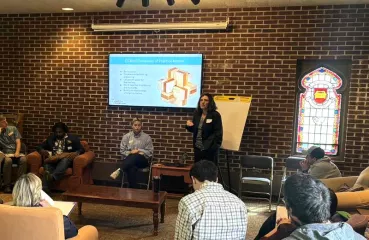
In 2023, Mayor Bruhn attended a conference where communities across the state shared how new energy investments were paying off. The message from other cities was clear: clean energy options, like solar, are lowering costs and strengthening local budgets. Even though the other cities were larger and had more resources, Bruhn left inspired. 

She then spoke with Clean Energy Resource Teams' Coordinator Heidi Auel. They talked about how energy efficiency could make a real difference for her city, without compromising what makes it special. The downtown main street is framed in historic buildings, yet those same charming features can also present challenges, Bruhn notes, like inefficient and aging infrastructure, or limited tax capacity.

New support for a new path forward

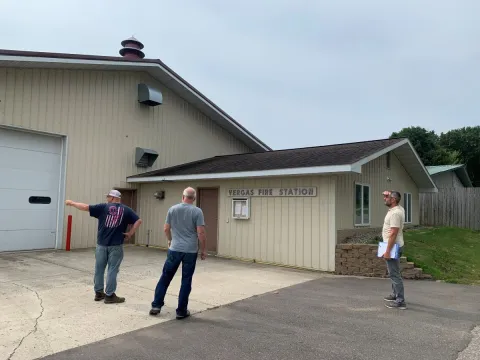
University of Minnesota’s College of Design, Center for Sustainable Building Research’s Garrett Mosiman and Daniel Handeen tour the city.To move these ideas forward, Bruhn and her staff turned to Heidi’s colleagues at the Regional Sustainable Development Partnerships (RSDP). They submitted an RSDP Project Idea Brief that ended up getting selected, and they also applied to the Empowering Small Minnesota Communities (ESMC) program for additional support.

Through ESMC and connections made by Central RSDP Executive Director Molly Zins, the City of Vergas partnered with the University of Minnesota’s College of Design’s Center for Sustainable Building Research (CSBR) to gather data needed for smart decisions for the future.

CSBR architects and researchers benchmarked energy and water use, assessed building enclosures, conducted thermal testing, and modeled scenarios for improvements. Their technical work, coupled with hands-on support from Auel, created an actionable roadmap that the city can use to weigh options and make informed choices about upgrades.

“The City of Vergas emphasizes how a small town can do more with less. With passionate and motivated community members, decisions and actions can often happen more quickly than in a larger city. A core part of the motivation for the city was so they could see their actions replicated in other places like Vergas.” 
 

- Heidi Auel, Central CERT coordinator

“It was a really comprehensive picture of our buildings. They looked at energy use, air leakage, and opportunities for improvements,” Mayor Bruhn explained. “All of that data will help us tell the story to our community about why this work matters.”

Throughout both projects, Auel and Zins made sure the project ran smoothly, including hiring a Humphrey School graduate student and coordinating collaboration with the West Central Initiative Climate Action program to develop what is now called the Community Resilience and Energy Plan. As part of their plan, they have begun installing a 26 kW solar array combined with a 40kWh energy storage system at the city's event center. This will serve as a resilience hub for the community. Future goals include adding solar to the fire hall as well.

Discover a community like no other

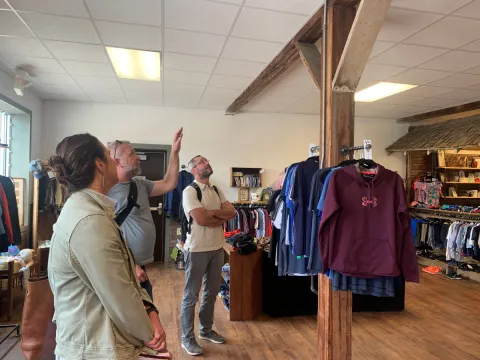
That spirit of collaboration continues through the city’s new Resiliency Advisory Board, a group of community volunteers helping to continue guiding the progress in ways that reflect the community’s priorities. The alignment between residents, staff, and city leadership is especially remarkable in a community of Vergas’ size, according to Zins.Molly Zins, Garrett Mosiman (CSBR), and Daniel Handeen
 “It’s amazing what Vergas is accomplishing,” she says. “They have visionary leadership, an engaged staff, and a city council that works collaboratively.”

While the city’s motto may be, “A town like no other,” Zins notes that Vergas’ approach offers a model for other communities. “When trust, leadership, and local voices move in the same direction, the results can be extraordinary. Understanding how a small community does this kind of work is important for replicating it elsewhere,” she says.

The story of Vergas is, at its heart, a story of possibility. It shows how a small, rural city can use data, partnerships, and commitment to build something transformative. Vergas is proving that innovation does not depend on population size. It depends on the willingness and capacity to pursue answers to the big questions, like “Why not us?”

Read the full City of VergaS Story

Every step counts

Vergas is leading the way as a Minnesota GreenStep City, proudly achieving Level 2 recognition. Powered by committed local leadership and a community eager to roll up its sleeves, the GreenStep City framework is helping Vergas turn big sustainability goals into real, on-the-ground progress, one step at a time.

Sign up for Energy Stories

We encourage reuse and republishing of this story. All Clean Energy Resource Teams stories are made available under the Creative Commons Attribution license, meaning you can share and adapt the work as long as you give us credit. We'd also love it if you link back to the original piece. Have questions or want to chat? Drop us a line.